
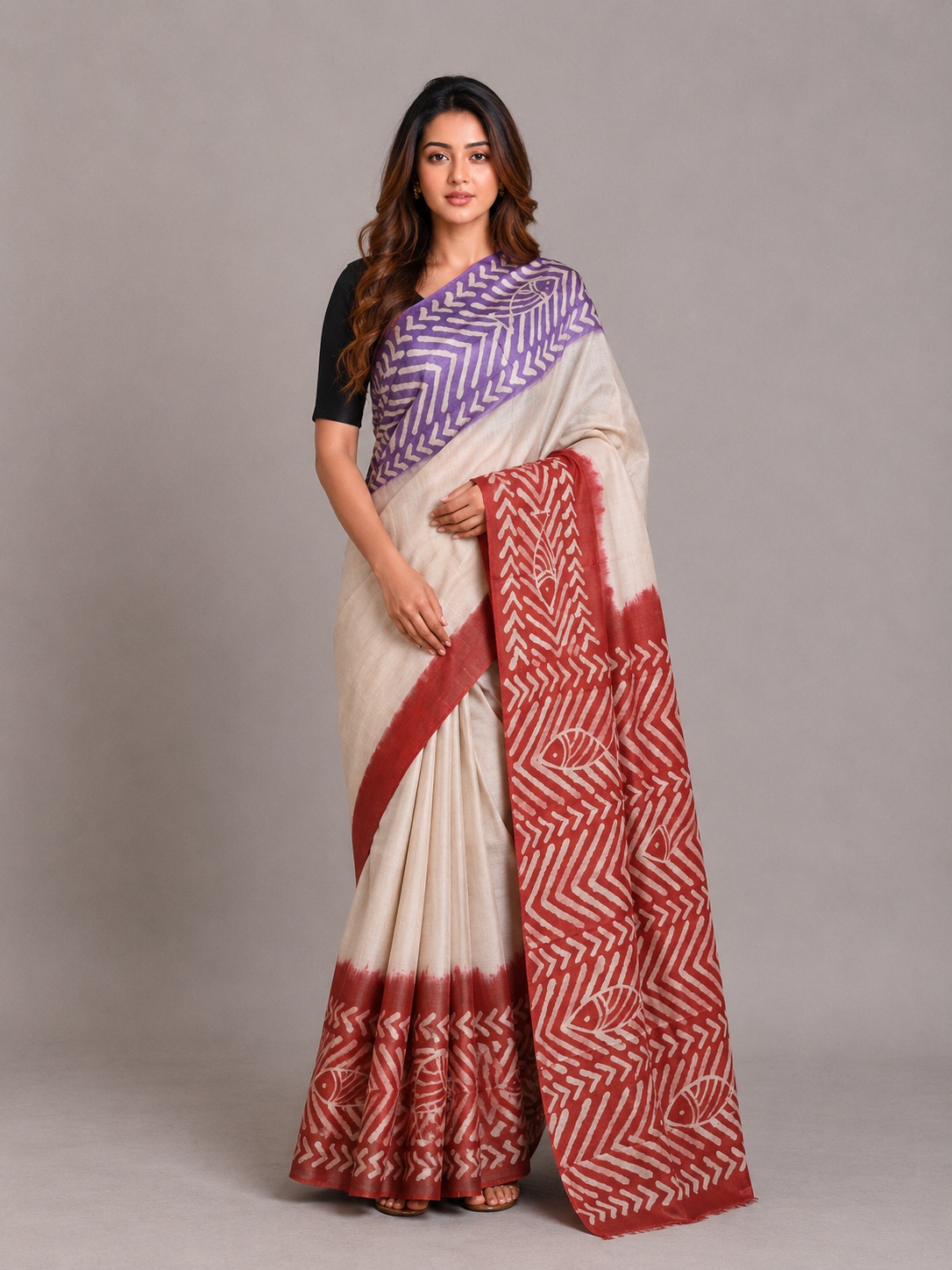
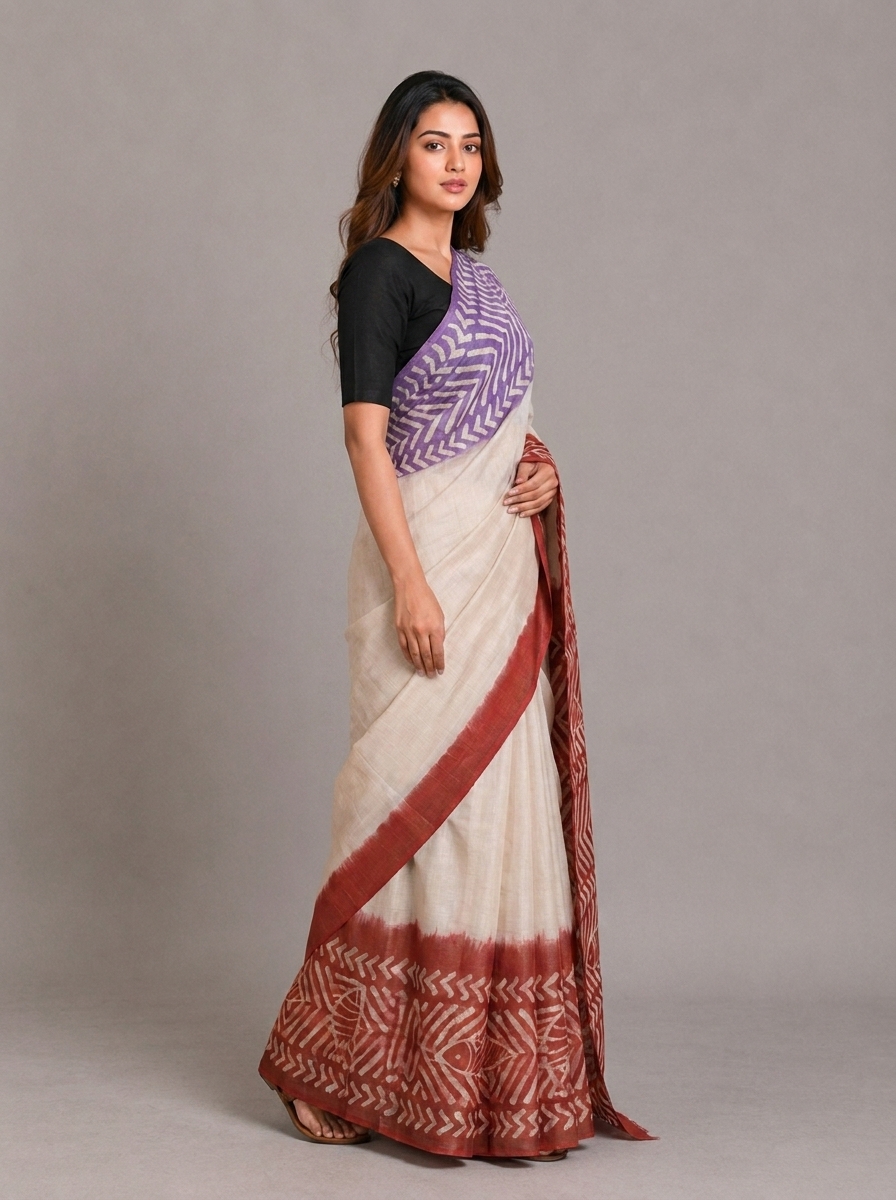
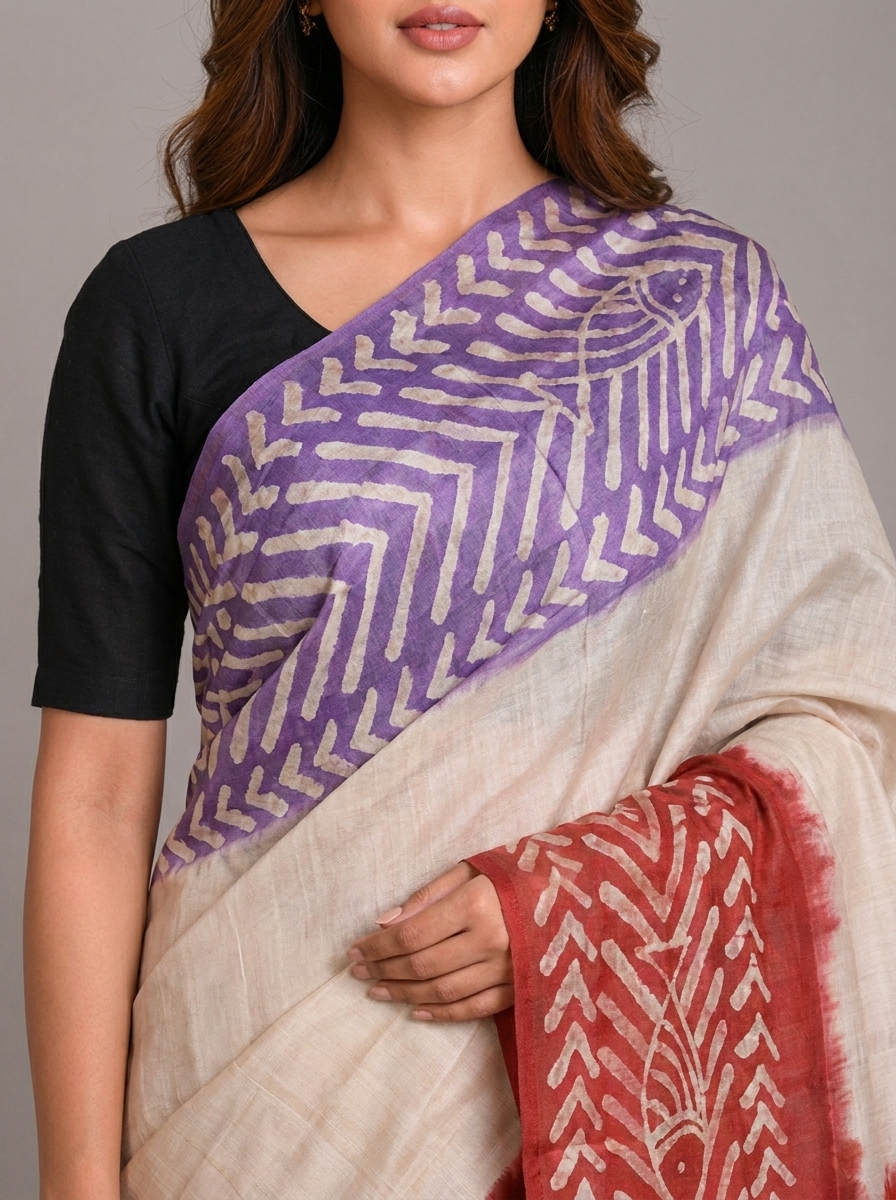
The Ganga-Jamuna border on this saree refers to a two-toned weaving and dyeing tradition where two complementary colours or patterns run parallel — here rendered in traditional fish batik by an artist from Bengal’s batik tradition, where fish motifs are among the oldest and most auspicious symbols in textile art. The natural, undyed tussar base was chosen deliberately — the virgin colour of the silk is itself sacred, the colour of the cocoon, the colour of beginning. The batik work in the palla continues the water-and-fish story from border to end.
This is Tussar in its most honest form — undyed, unaltered, the colour the silkworm chose. Kosa silk, as it is known in Jharkhand and Chhattisgarh where much of India’s tussar originates, is spun from forest silkworms living on arjun, asan, and sal trees. The resulting silk is naturally warm, textured, and carries in its very grain the memory of the forest it came from. Wearing it is like being trusted with something ancient.


Reviews
There are no reviews yet.